Guide
Canada Visitor Visa Refusal Decoder
For Canada visitor-visa applicants who want to understand refusal reasons, identify application gaps, and prepare a stronger reapplication.
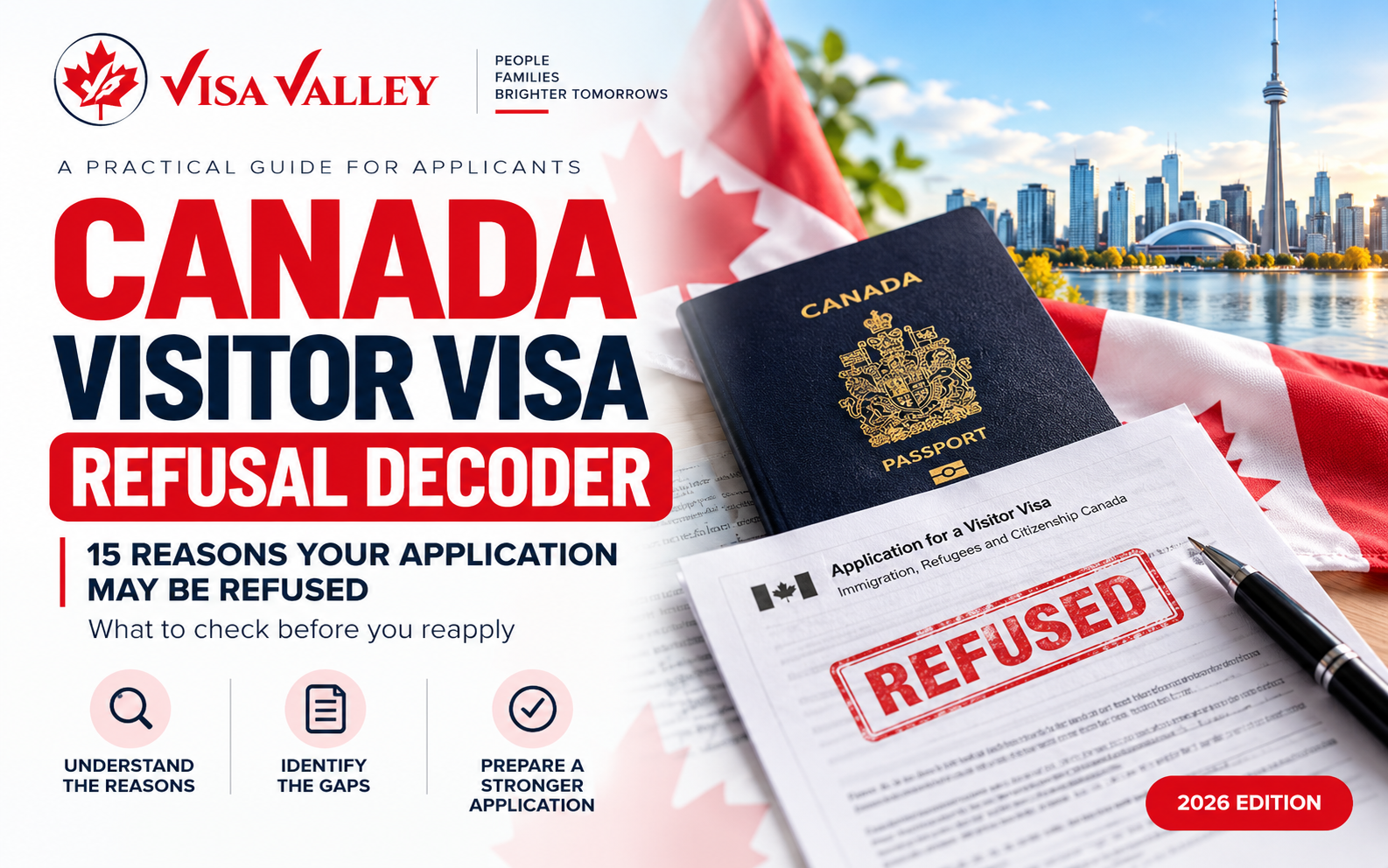
This practical guide explains the key areas IRCC assesses in a Canada visitor-visa application, including purpose of visit, finances, home-country ties, travel history, family circumstances, and proposed length of stay. It also provides a six-step refusal-recovery process and a 15-point self-assessment checklist to help applicants review their refusal, identify weak areas, and organize stronger supporting evidence. The guide is designed for applicants preparing to reapply after a refusal and emphasizes addressing the specific concerns identified in the refusal rather than simply submitting the same application again.
Inside this resource
What you'll get
Understand the main refusal areas
Review the key factors officers assess, including visit purpose, finances, home-country ties, travel history, family circumstances, and length of stay.
Identify gaps in your application
Use the refusal-recovery framework and 15-point audit to pinpoint areas that may need stronger evidence or clearer explanations.
Prepare a stronger reapplication
Follow a structured process for reviewing the refusal, identifying weak points, collecting stronger evidence, rebuilding the application, and reassessing before reapplying.
Avoid common reapplication mistakes
Learn what the guide identifies as mistakes to avoid, including submitting the same documents without addressing the refusal and hiding previous immigration history.
Audit application consistency
Check whether your forms, documents, invitation letter, travel history, purpose, finances, and supporting evidence tell a consistent story.
About the author

Elvis Davis Kannath
Author
Regulated Canadian Immigration Consultant